A Shift in Digital Habits Across Malaysia
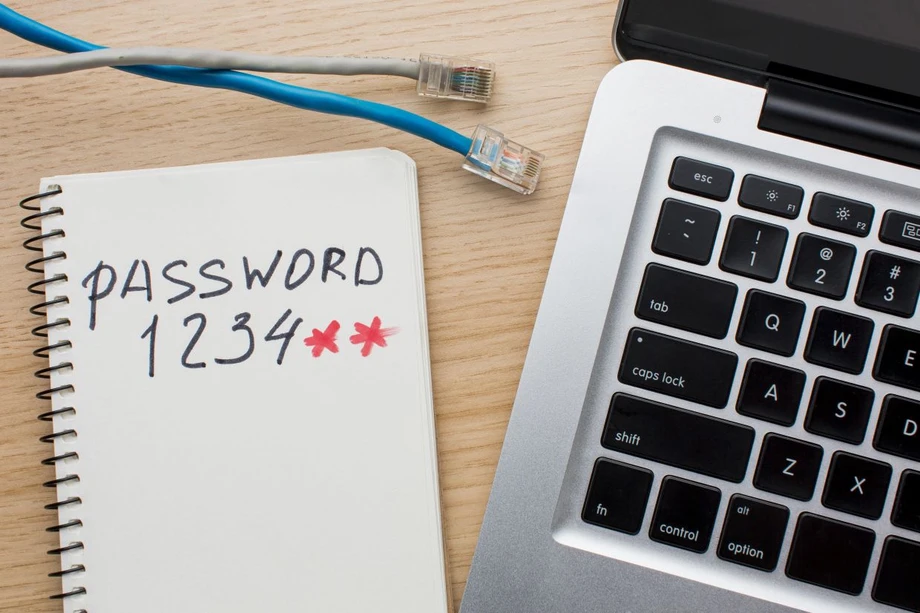
Malaysia has officially crowned a new king of vulnerable digital credentials, with the six-digit sequence 000000 overtaking 123456 as the country's most common password. Password manager NordPass revealed that 000000 appeared 120,617 times in data leaked over the year leading up to September. The previous top password, 123456, slipped to second place with 83,896 appearances, closely followed by 111111 at 77,060 appearances. The findings stem from the Top 200 Most Common Passwords 2026 published by NordPass, which analyzed public data breaches and dark web repositories across 44 countries and territories in collaboration with NordLayer Intelligence by NordStellar and independent researchers.
目录
Half of the top 20 breached passwords in Malaysia consisted entirely of numbers. Other entries relied on predictable keyboard patterns and basic capitalizations such as Nn123123 in fourth place, Asd123 in fifth, and password in eleventh. Only two entries in the entire top 20 list, admin and password, contained no digits. Cybersecurity practitioner Murugason R. Thangaratnam explained that these local rankings reflect older or PIN-style online services that prioritize user convenience over minimum complexity checks.
Data cited by Business Today in May placed Malaysia sixth in Southeast Asia for overall cyberattacks, recording an average of 152 breached accounts per 100 people compared with the regional average of 55. This high exposure to breaches highlights a widespread reliance on simple credentials that take less than a second to crack. Across Southeast Asia and similar non-Latin script markets, pure number sequences dominate user choices, whereas Latin-alphabet countries lean more heavily toward word-based credentials.
Global Password Trends and the Persistence of Simple Sequences
Worldwide, 123456 maintained its dominance for the seventh time in eight years, appearing more than 7.2 million times in leaked datasets. The global list placed admin in second with over 4.4 million appearances and 12345678 in third with over 2.9 million appearances. In Vietnam, 123456 kept the top spot with 474,071 appearances, followed by numerical sequences 123456789 and 12345678. The global research also noted an increase in the use of special characters, with 39 passwords on this year's list containing them, compared with 32 last year. Many of these remained predictable, using combinations such as Admin@123 and P@ssw0rd.
Karolis Arbaciauskas, head of product at NordPass, addressed the common pitfall of relying on short strings with symbols. He urged users to abandon these weak combinations in favor of stronger alternatives.
If you have to create a non-random password, for example, a master password, it is better to go with a long passphrase made of two or three words than a short and common password with special characters.
Default router passwords also surfaced as a significant security risk. Credentials such as ALC#FGU and adminHW ranked 116th and 118th respectively on the global list, raising concerns about routers and Internet of Things devices that remain active with factory settings unchanged.
Pop Culture and Historical Influences on Digital Security
Human interests often dictate digital choices, making everyday accounts surprisingly easy to guess. Pop culture references have populated password lists for decades, ranging from anime and video game characters such as sasuke and minecraft in the 2000s and 2010s to internet slang like skibiditoilet and squidgamethebest in the 2020s. Sports figures also feature prominently, with Lebron0319 leading sports-inspired entries alongside soccer stars like Messi, Lampard, and Lewandowski. Arbaciauskas noted that fandoms create predictable vulnerabilities.
Pop culture passwords are a reminder that what you love makes you predictable. Hackers do not need to know you personally, they just need to know your interests. Combine a childhood favorite band with a birth year, and you get a credential that is both sentimental and might be cracked in under a second.
The COVID-19 pandemic also left a lasting mark on cybersecurity habits. Entries like Covid@19 and Covid19sucks emerged to reflect public sentiment during the health crisis. Furthermore, the pandemic altered password creation volumes, with the average number of passwords per user increasing by 25 percent between February and October 2020 as daily life shifted online.
National Security Context and Official Responses in Malaysia
The password vulnerabilities emerge amid heightened concerns over national cybersecurity. Prime Minister Anwar Ibrahim revealed on November 14 that Malaysia faces thousands of monthly cyberattack attempts. Authorities raised the national cyber threat level from low to medium on November 4, just days before hackers defaced the website of Bank Rakyat, the country's largest Islamic cooperative bank. Communications Minister Fahmi Fadzil stated that no significant cyber threats to people's data or national infrastructure had been detected so far, adding that claims of widespread data leaks on dark web sites remained unverified.
Expert warnings emphasize the need for heightened vigilance across vital economic sectors. Ainuddin Wahid Abdul Wahab from Universiti Malaya warned that critical infrastructure sectors like energy, water, and transport require immediate security reinforcement and robust disaster recovery plans. He noted that some industrial control systems in these sectors were originally built in isolation before being connected to the internet, increasing their exposure.
M Selvakumar from Universiti Sains Malaysia pointed out that widespread digitalization and current geopolitical tensions have drawn increased attention from malicious hacking groups. Both experts advised organizations to enforce strict security baselines, including changing default device credentials, maintaining offline data backups, and monitoring suspicious network activity.
Expert Guidance and Individual Protection Measures
Individual users carry a shared responsibility in preventing unauthorized account access. Cybersecurity specialists recommend creating unique passwords or passphrases that are at least 14 characters long and combine letters, numbers, and special characters. Additional protective measures include enabling multi-factor authentication across all active accounts and disabling auto-download features on messaging applications like WhatsApp and Telegram to block malicious file transfers.
Authorities urge citizens to remain cautious of unsolicited links and attachments. Anyone who encounters online fraud or suspects a security breach should immediately contact the National Scam Response Centre at the dedicated hotline 997. Maintaining digital hygiene begins with basic daily habits, ensuring that convenience never supersedes data safety.
At a Glance
- NordPass revealed that 000000 is now Malaysia's most common password, appearing 120,617 times in leaked data.
- Global password leader 123456 appeared over 7.2 million times worldwide, maintaining the top spot for the seventh time in eight years.
- Malaysia ranks sixth in Southeast Asia for cyberattacks, averaging 152 breached accounts per 100 people.
- Prime Minister Anwar Ibrahim noted that Malaysia faces thousands of monthly cyberattack attempts.
- Experts advise users to deploy long passphrases and enable multi-factor authentication to secure digital accounts.