
BHP Sets Sights on Massive South Australian Expansion
BHP announced a major strategic roadmap on Nov 23, 2026, at 4:28 AM, detailing plans to invest between US$13.6 billion and US$17.4 billion to double its copper production in South Australia by 2040. Alternative cost figures between $14.2 billion and $18.1 billion, as well as an upper bracket of $20.5 billion to $26.2 billion, were also outlined for the expansive regional strategy. The company aims to lift annual output from the region to 650,000 metric tons. Following the announcement, shares in the mining company rose 2.1% to reach $51.94.
目录
- BHP Sets Sights on Massive South Australian Expansion
- Tackling Complex Ores and Lowering Costs
- Boosting Uranium and Global Critical Mineral Supply
- Addressing Water and Power Infrastructure Needs
- Global Demand Driven by Electrification and Artificial Intelligence
- Timeline of Key Events and Decisions
- What Remains Unknown and Next Steps
- The Bottom Line
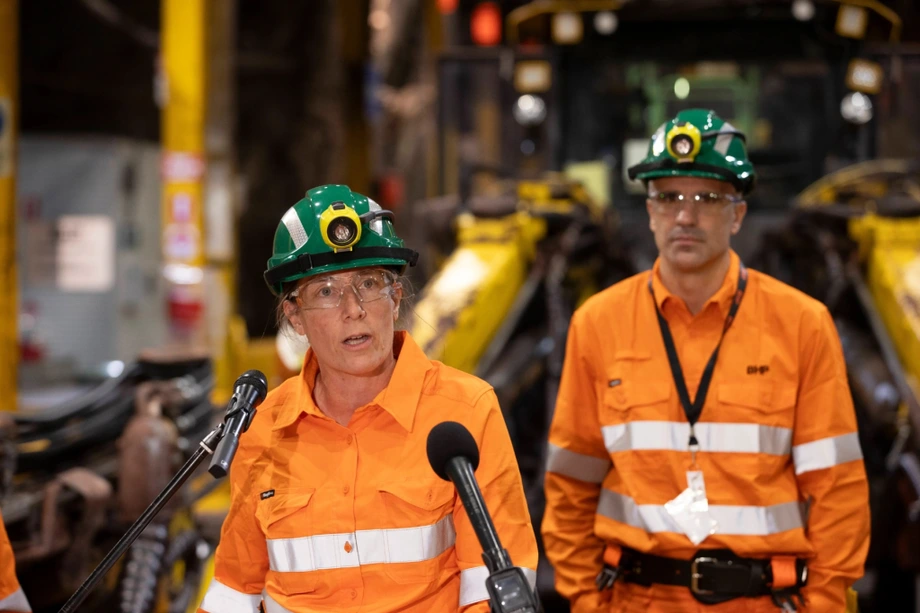
Copper is a soft, reddish-brown metal that conducts electricity very well, making it essential for wiring, electric vehicles, and renewable energy systems. Geraldine Slattery, BHP's head of Australian operations, spoke to investors during a site tour on Nov 23, 2026, explaining the strategic importance of the region. Geraldine Slattery stated that the growth path is fully fundable from existing cash flows.
We start from a strong position as the world's largest copper producer, with a sector-leading growth pathway that can be funded from existing copper cash flows.
Tackling Complex Ores and Lowering Costs
The South Australian operations include the longstanding Olympic Dam mine, the Carrapateena and Prominent Hill mines acquired from OZ Minerals in 2023, and an Olympic Dam discovery made in 2018 called Ankata. These sites are located within the Gawler Craton, an ancient geological structure formed roughly two billion years ago. Past operations in the region faced hurdles due to high radioactivity, operational instability, complex metallurgy, and external infrastructure constraints involving water and power. To overcome these obstacles, BHP plans to introduce block caving, a bulk mining method that uses gravity to collapse deep ore bodies underground. The company also plans to build a two-stage smelter to replace older infrastructure. Anna Wiley, BHP Copper SA president, emphasized the necessity of this upgrade during the investor briefing.
Converting to two-stage smelting is essential to unlocking Olympic Dam's current reserves.
Boosting Uranium and Global Critical Mineral Supply
The expansion of processing facilities will also increase output of valuable byproducts such as uranium, silver, and gold. BHP plans to roughly double the capacity of its uranium processing plant to between 5,000 and 6,000 tonnes a year, marking a 50% rise that will lift Australia's contribution to global uranium supply to around 10%. Uranium is a heavy metal used to fuel nuclear power reactors that generate electricity without burning fossil fuels. When including uranium, silver, and gold, BHP expects the output value from Copper South Australia to approach the production levels of Chile's Escondida mine, which is currently the largest copper mine in the world.
Addressing Water and Power Infrastructure Needs
Operating mines in an arid region on the fringes of the Australian Outback requires large amounts of water, which has previously relied on the Great Artesian Basin and drawn concern from traditional owner groups such as the Arabana people. To reduce reliance on artesian water, BHP is looking to a planned 260-megalitre-a-day seawater desalination plant at Cape Hardy on South Australia's Spencer Gulf, alongside a separate state government proposal for a $5 billion desalination plant near Whyalla that would provide 140 megalitres per day through a 400km pipeline. Desalination is the industrial process of removing salt from ocean water to make it fresh and usable for drinking and mining. The state government is due to make a final investment decision on the Northern Water infrastructure project next year, with first water targeted for fiscal 2032. The mining expansion will also require power upgrades, including a 275-kilovolt transmission line running 273km from the town of Davenport.
Global Demand Driven by Electrification and Artificial Intelligence
BHP expects global demand for copper to grow by 30% by 2040, exceeding 45 million tonnes per year. Geraldine Slattery noted that this surge is driven by global electrification, rapid digitalisation, and rising demand from artificial intelligence data centers. Artificial intelligence refers to computer systems designed to perform tasks that typically require human intelligence, such as learning, reasoning, and processing massive datasets, which require extensive server farms powered by electricity. In fiscal 2026, copper generated more financial value for BHP than iron ore for the first time in the company history.
Timeline of Key Events and Decisions
- December 2025: A site is selected for a proposed desalination plant near Whyalla to support regional industries.
- November 23, 2026: BHP outlines its multi-billion-dollar copper growth plan during an investor presentation and site tour.
- November 24, 2026: BHP welcomes international journalists to Roxby Downs for site briefings.
- First Half of 2027: BHP is scheduled to make its final investment decision on the copper expansion project.
- Fiscal 2032: The target date for the first water delivery from the Northern Water infrastructure project.
- 2040: The target year for completing the expansion and reaching 650,000 metric tons of annual copper output.
What Remains Unknown and Next Steps
No final funding commitment has been signed yet, as the final investment decision by BHP is scheduled for the first hlaf of next year. State and federal governments have not yet committed funding to the Cape Hardy desalination project, and the South Australian government has not finalized its investment decision for the Northern Water infrastructure project. Until the board formally approves the capital expenditure, the multi-billion-dollar production targets remain projections rather than guaranteed construction schedules.
The Bottom Line
- BHP plans to invest between US$13.6 billion and US$17.4 billion to double South Australian copper production.
- Annual output is targeted to reach 650,000 metric tons by 2040, matching the scale of Chile's Escondida mine.
- The project introduces block caving and a two-stage smelter to lower operating costs at Olympic Dam.
- Uranium production is set to increase by 50% to between 5,000 and 6,000 tonnes annually.
- A final investment decision by BHP is expected in the first half of next year.