
The Human and Economic Cost of Indonesia Wildfires
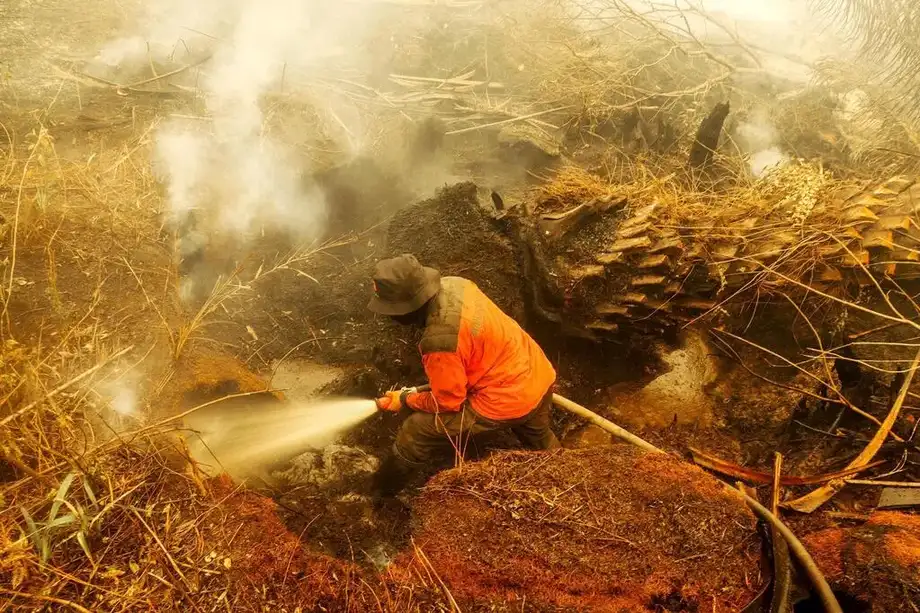
Indonesian forests and peatlands have suffered an immense environmental disaster during 2026, marking the worst fire season in 11 years. According to an assessment published by the Center of Economic and Law Studies (CELIOS), the total economic and health costs of the fires have reached between 359.58 trillion rupiah and 565.03 trillion rupiah (approximately 30.9 billion US dollars to 41.7 billion US dollars). These fires have burned through 2.88 million hectares across islands including Borneo, Sumatra, and Papua, an area roughly 18 times the size of London. The blazes are driven by a strong El Nino weather phenomenon, ongoing deforestation, and the drainage of peatlands for commercial use. The resulting smoke has triggered health emergencies across the region, sending toxic haze across borders into neighbouring Malaysia and Singapore.
目录
Physical asset destruction and disruptions to economic activities alone amount to 340 trillion rupiah, which represents about 2.69 percent of Indonesia national gross domestic product. CELIOS director and co-author Nailul Huda explained that the burden falls heavily on the public through both direct and indirect economic shocks. The agricultural and forestry sectors have absorbed the largest share of these financial losses, followed closely by manufacturing. Civil society groups point out that local governments in fire-affected regions often receive inadequate compensation compared to the heavy environmental degradation caused by extractive industries.
Galau D. Muhammad, a researcher at CELIOS, emphasised that state support during such crises must be treated as a fundamental duty rather than charity. In a statement regarding the economic fallout, Galau said:
Disaster response is not an act of government generosity or aid, but rather the fulfillment of the people's basic rights to a livable environment and health. In fact, dependence on extractive industries has proven to be a losing proposition for these regions.
A Public Health Emergency Across Twelve Provinces
The thick smoke pouring from the burning peatlands has created a severe respiratory crisis, putting 17.4 million people across 12 provinces at risk of acute respiratory infections. The Indonesian Health Ministry recorded more than 401,500 cumulative respiratory infection cases across seven provinces and 63 districts by early November 2026. Smoke pollution in August alone was estimated to have caused 1,700 deaths, while separate government estimates attribute thousands of fatalities to worsening air quality during the autumn months. Hospitals and clinics have struggled to keep pace with the influx of patients suffering from coughing, eye irritation, and asthma flare-ups.
Vulnerable populations, including pregnant women, newborns, and breastfeeding mothers, face heightened dangers due to gaps in official emergency response protocols. Rizky Pontiviana Akbari, chair of the Indonesian Breastfeeding Mothers Association (AIMI) in West Kalimantan, described the overwhelming conditions faced by families. She noted that West Kalimantan recorded 1,337 respiratory infection cases in a single day during the peak of the smoke pollution, leaving mothers to cope without adequate support. Rizky highlighted the plight of these groups, stating:
Respiratory infections in West Kalimantan once surged to 1,337 cases in a single day, yet pregnant women, breastfeeding mothers, and newborns have not been designated as vulnerable groups and remain excluded from disaster response protocols. Without smoke-free safe spaces and emergency breastfeeding guidelines, mothers and infants are forced to bear multiple health risks.
Healthcare expenses linked to diagnosed upper respiratory tract infections are projected to reach 19.20 trillion rupiah, while total health costs could balloon to 224.65 trillion rupiah if undiagnosed individuals experiencing symptoms are included. Medical professionals have called for proactive funding mechanisms. Dr. Celline Wijaya, a physician and health researcher, stressed that because fires happen almost every year, budgets should automatically activate when air quality deteriorates rather than relying purely on reactive emergency spending.
Corporate Accountability and License Revocations
In response to the ecological crisis, Indonesian authorities have launched aggressive enforcement measures against commercial operators accused of negligence or illegal land clearing. The Forest Area Enforcement Task Force (Satgas PKH) announced the revocation of the Business License for Forest Utilization held by PT Riau Andalan Pulp and Paper (PT RAPP) in Pelalawan Regency, Riau. According to a press release from the task force on November 20, 2026, the cancellation was issued under the Decree of the Minister of Forestry of the Republic of Indonesia Number 971 of 2026. The penalty returns approximately 338,536 hectares of forest land to state control.
Barita Simanjuntak, spokesperson for the enforcement task force, detailed the multiple violations that prompted the administrative sanction against the forestry company. Investigators discovered recurring peatland fires within the concession, an unpermitted oil palm plantation covering 18,362.74 hectares, unpermitted mining land clearing over 541.46 hectares, and damage to protected areas spanning 211.54 hectares. Officials also noted that operations threatened buffer zones surrounding Tesso Nilo National Park, which serves as a crucial habitat for endangered Sumatran elephants. Barita outlined the government enforcement stance, stating:
With the revocation of this license, all activities within PT RAPP licensed area are halted, and the land will revert to state control.
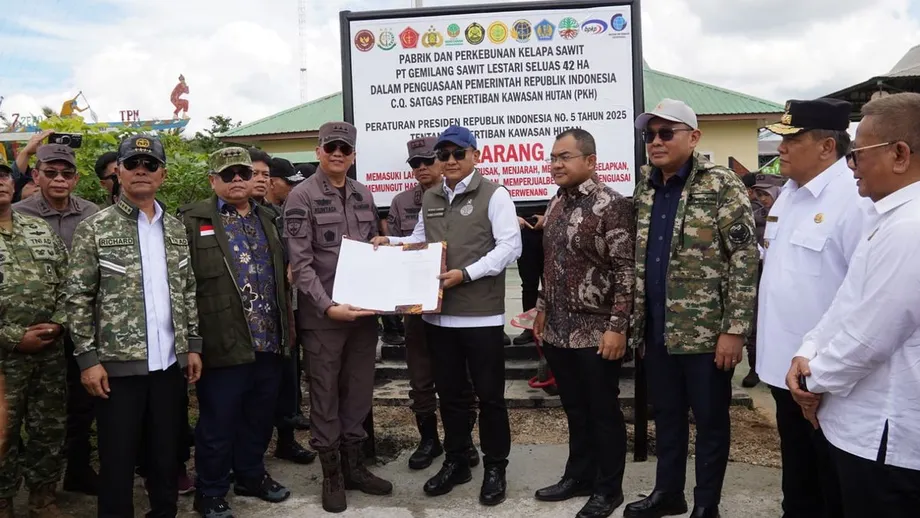
Alongside these direct revocations, authorities are investigating other enterprises connected to environmental degradation. The government previously initiated actions withdrawing land rights covering more than 42,000 hectares from eight companies linked to fire outbreaks, as detailed in recent government enforcement measures. Civil lawsuits and administrative reviews continue to target businesses whose land management practices weakened the landscape's ability to retain moisture and prevent runaway fires.
Legislative Reforms and Forestry Law Revisions
Lawmakers in Jakarta are moving to overhaul the legal framework governing forest management to impose harsher penalties on corporate offenders. The House of Representatives (DPR) is currently discussing revisions to Law Number 41 of 1999 on Forestry, focusing on stricter corporate accountability and mandatory fire prevention infrastructure. Abdul Kharis Almasyhari, the Deputy Chair of Commission IV of the DPR, explained that the updated legislation will introduce severe consequences for companies found responsible for deliberate or mismanaged fires. During a working meeting with Minister of Forestry Raja Juli Antoni, Abdul Kharis outlined the scope of the new penalties. He stated:
Corporations proven to have violated the law may face additional criminal charges such as compensation penalties, recovery costs, even dissolution of the company, as well as increased basic penalties.
The legislative updates follow a series of environmental disasters, including the deadly floods and landslides in Sumatra that prompted the government to seek 4.8 trillion rupiah in damages through civil lawsuits under the polluter pays principle, similar to claims pursued following major regional floods earlier in the year. The proposed Forestry Bill aims to strengthen state control, mandate that commercial permit holders maintain functioning fire control systems, and protect customary forests in accordance with rulings from the Constitutional Court.
Public Discontent and Broader Social Pressures
The economic hardship caused by destroyed crops, disrupted transport, and medical bills has fueled widespread public frustration. University students and civil society coalitions staged coordinated demonstrations across major cities such as Jakarta, Bandung, Yogyakarta, Pekanbaru, and Makassar as President Prabowo Subianto marked two years in office. Protesters demanded that the government officially declare the wildfires a national disaster, prosecute corporate wrongdoers, and make education and healthcare more accessible. Security forces deployed over 9,000 personnel in Jakarta alone to manage the demonstrations, which connected immediate economic survival with the environmental crisis.
Dzatmiati Sari, advocacy and outreach coordinator at CERAH, argued that current government responses remain too superficial and reactive. She called for structural changes to stop subsidizing extractive industries and instead invest in long-term ecological restoration. Meanwhile, labour and social welfare advocates expressed concern over the simultaneous deactivation of millions of healthcare subsidy recipients, which has complicated access to medical treatment for low-income families during a public health emergency. The compounding pressures of inflation, job scarcity, and toxic haze have transformed the annual fire season into a profound test of the administration's social and environmental policies.
Timeline of Key Developments
- May 11, 2026: Energy officials outline plans for expanded strategic fuel and oil storage buffers in Sumatra.
- August 2026: Smoke pollution reaches peak density, causing an estimated 1,700 deaths during the month.
- September 2026: Satellite monitoring by Nusantara Atlas records extensive land clearing and burning across millions of hectares.
- October 20, 2026: Students hold nationwide protests demanding stronger climate action, affordable living costs, and an official national disaster declaration as President Prabowo Subianto marks two years in office.
- November 15, 2026: President Prabowo Subianto issues a formal apology at the ASEAN summit for cross-border haze affecting neighboring countries.
- November 19, 2026: The Ministry of Forestry presents the inventory of issues for the revision of Law Number 41 of 1999 to Parliament.
- November 20, 2026: The Forest Area Enforcement Task Force officially revokes the operational license of PT RAPP under Ministerial Decree Number 971.
At a Glance
- Economic losses from the 2026 Indonesian wildfires are estimated between 359.58 trillion rupiah and 565.03 trillion rupiah (up to 41.7 billion US dollars).
- Fires have burned 2.88 million hectares across Borneo, Sumatra, and Papua, severely worsening regional air quality.
- Health impacts include over 401,500 recorded acute respiratory infection cases and millions of people placed at risk.
- The government revoked the forest utilization license of PT RAPP, returning nearly 338,536 hectares of land to state control due to multiple violations.
- Parliament is reviewing revisions to the Forestry Law to introduce mandatory corporate compensation, recovery costs, and potential company dissolution for environmental offenses.