
Festive Season Drives Record QR Code Usage
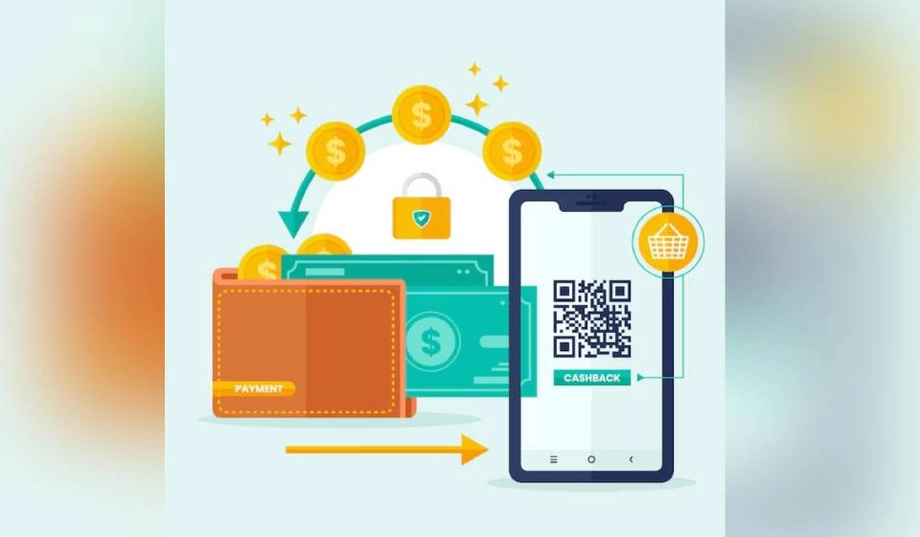
Nepal witnessed a massive shift toward digital payments during the festive shopping period between mid-September and mid-October. Consumers abandoned cash in favor of scanning QR codes at establishments ranging from small roadside tea stalls to large commercial centers. Statistics published by the Indicators Archives show that QR transactions rose by 23.58 percent over a single month. Total transactions reached 78,144,000, up from 75,581,000 in the previous review period.
目录
- Festive Season Drives Record QR Code Usage
- Digital Wallets Gain Popularity for Everyday Services
- Contrasting Trends in Mobile Banking Applications
- Historical Growth of Automated Clearing Systems
- Market Dominance and Merchant Infrastructure
- Regulatory Framework and Licensing Standards
- Cross-Border QR Integration and Regional Reach
- At a Glance
Financial values grew at an even faster pace than transaction frequency. The total monetary value of QR payments climbed from Rs 167.93 billion to Rs 207.54 billion, representing a single-month increase of Rs 39.61 billion. Analysts attribute this sharp financial growth to heavy festival spending on clothing, electronics, food items, and daily essentials during Dashain.
Digital Wallets Gain Popularity for Everyday Services
Digital wallets such as eSewa and Khalti experienced substantial growth during the same festive window. Transaction values across these platforms increased from Rs 49.09 billion to Rs 55.82 billion. Users increasingly relied on these applications for routine financial tasks like mobile top-ups, utility bill settlements, airline ticket purchases, and peer-to-peer money transfers to relatives.
Long-term data highlights just how fast this sector has expanded over recent years. According to findings published in the Digital Financial Services in Nepal report, the total number of registered digital wallet users surged from 6.2 million in mid-August 2020 to 18.9 million in mid-July 2023. This represents a staggering 201 percent user growth rate over a three-year span.
Contrasting Trends in Mobile Banking Applications
Mobile banking platforms recorded a different trajectory during the festive rush. The total volume of transactions conducted via mobile banking apps fell from 81,194,000 to 65,967,000, which marks an 18.75 percent decline over the course of a single month. Despite this drop in trading frequency, the total financial value processed through mobile banking remained relatively stable at Rs 602.09 billion, down just 2.05 percent from Rs 614.67 billion.
This divergence suggests that while consumers completed fewer individual transfers through bank applications, they likely reserved mobile banking for larger, higher-value financial movements. Meanwhile, quick and convenient QR scans captured the smaller, frequent retail purchases associated with holiday shopping.
Historical Growth of Automated Clearing Systems
Nepal established foundational clearing systems that paved the way for modern retail digital payments. Interbank Payment Systems (IPS) expanded from processing just 0.5 million transactions in fiscal year 2016 and 2017 to 21.5 million transactions by fiscal year 2023 and 2024. This represents a 44-fold increase in system volume.
Similarly, connectIPS transactions grew from 0.2 million to 16.6 million over a comparable timeframe. Retail payment initiatives also expanded dramatically. QR code transaction values jumped from NPR 94.5 billion (USD 0.7 billion) in fiscal year 2021 and 2022 to NPR 245 billion (USD 1.8 billion) in fiscal year 2022 and 2023.
Market Dominance and Merchant Infrastructure
A few major players command the vast majority of the digital payment landscape in Nepal. Fonepay held a 99 percent market share in person-to-merchant transactions in 2023. Between 2019 and 2023, Fonepay processed QR transactions totaling NPR 471 billion (USD 3.5 billion).
Individual platforms have built massive merchant and user networks across the country. Launched in 2009 as the nation's first digital wallet, eSewa now maintains 8 million registered users, 250,000 agents, and acceptance by 350,000 merchants. Khalti operates as the second-largest wallet with over 4 million users, 76,000 merchants, and 1.5 million point-of-sale terminals known as Khalti Pasals. IME Pay serves as the third-largest provider with 3 million users and 35,000 agents.
Regulatory Framework and Licensing Standards
The Central Bank of Nepal acts as the primary financial regulator, overseeing digital infrastructure and licensing providers. As of mid-June 2024, the institution licensed 35 payment entities, consisting of 26 payment service providers and nine payment service operators. These firms must meet strict capital requirements depending on their licensing category to ensure financial stability.
Card issuance figures demonstrate parallel growth in traditional electronic payment methods. Debit card numbers across the banking sector rose from 5.5 million in July 2018 to 12.2 million in July 2023. Credit card issuances climbed from 105,000 to 284,000 over the exact same five-year period.
Cross-Border QR Integration and Regional Reach
Cross-border financial connectivity has begun opening new avenues for regional visitors. By mid-July 2024, QR-based payments made by visiting Indian travelers reached NPR 321 million (USD 2.4 million). This integration allows tourists to make direct digital payments without needing to exchange physical currency upon arrival.
Micro, small, and medium enterprises form the backbone of the domestic economy, contributing roughly 22 percent to the national gross domestic product. The 2018 National Economic Census recorded more than 923,000 business establishments across the country. Microbusinesses account for 95.4 percent of these enterprises and generate 69.3 percent of jobs within the sector, making widespread QR adoption vital for small-scale merchants.
At a Glance
- QR-based transactions grew by 23.58 percent between mid-September and mid-October.
- Total monthly QR transaction values reached Rs 207.54 billion during the festive season.
- Digital wallet transactions climbed from Rs 49.09 billion to Rs 55.82 billion in a single month.
- Mobile banking transaction volume dropped by 18.75 percent while maintaining stable monetary values.
- Visitor QR spending from Indian travelers reached NPR 321 million by mid-July 2024.