

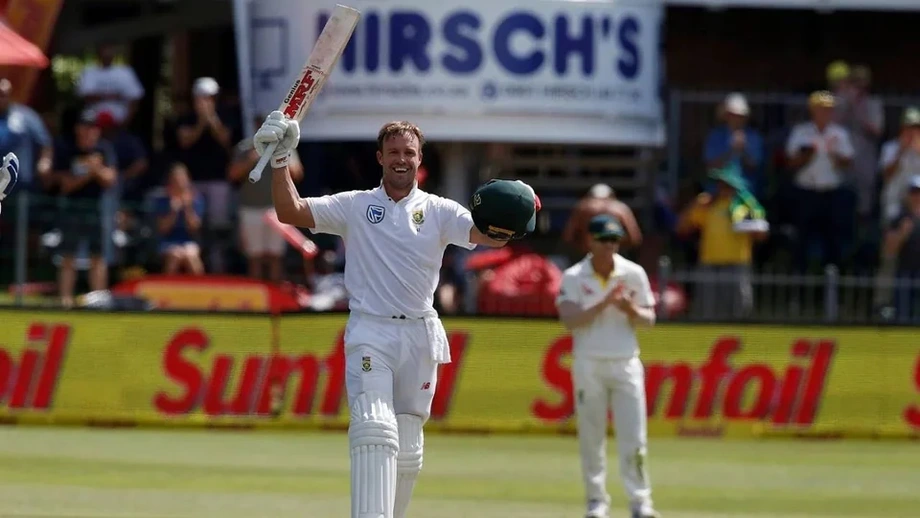
Unearthing New Claims From the 2018 Australia Tour of South Africa
Former South Africa captain AB de Villiers has stepped forward with startling new allegations regarding the infamous 2018 cricket series between Australia and South Africa. Speaking on his YouTube channel on November 23, 2026, the legendary batter stated that Australia's ball tampering tactics began long before the third Test at Newlands in Cape Town. While public attention has focused heavily on the use of sandpaper in Cape Town and subsequent admissions regarding the second Test in Port Elizabeth, de Villiers insisted that the deceptive practices started right at the beginning of the tour during the opening match at Kingsmead in Durban.
目录
- Unearthing New Claims From the 2018 Australia Tour of South Africa
- The Durban Match and Early Reverse Swing
- Reopening Old Wounds Through Memoirs and Columns
- Denials From Current Leadership and Growing Disagreements
- De Villiers Criticizes Collective Responsibility and Team Character
- Historical Context and Disciplinary Actions
- The Bottom Line
The controversy surrounding the tour known as Sandpapergate has resurfaced years later due to new revelations from players involved in the matches. Cameron Bancroft was originally caught on television cameras using sandpaper to alter the condition of the ball during the Cape Town Test in March 2018. That incident led to severe suspensions for Bancroft, then captain Steve Smith, and vice-captain David Warner, triggering one of the deepest crises in the history of Australian cricket.
The Durban Match and Early Reverse Swing
Addressing the opening match of the series, de Villiers pointed out that the behavior of the ball during the Durban Test raised immediate red flags for the South African team. He explained that reverse swing, a phenomenon where a cricket ball swings in the opposite direction of conventional swing due to one side becoming rougher than the other, occurred much earlier in the match than normal playing conditions at Kingsmead should have allowed. He noted that he had played a significant amount of cricket at that venue and recognized that the movement of the ball was abnormal.
We lost that first Test match in Durban with the ball reversing at a very, very interesting time. Way too early for anyone to reverse a ball at Kingsmead. Trust me, I have played a lot of cricket there. So whatever they did there, whether it was sandpaper or nails ... I don't care. The fact of the matter is they were caught and everyone knew.
The former South African star dismissed arguments centered around the specific tools used to alter the ball. He argued that debating whether sandpaper or another object was used misses the broader reality that a deliberate plan was put into action on the field.
Reopening Old Wounds Through Memoirs and Columns
The renewed debate gained momentum following the release of an autobiography titled Sabr by former Australia opener Usman Khawaja. In his book, Khawaja alleged that knowledge of the ball tampering plan extended far beyond the three players who received bans from the sport. His claims received support from Bancroft and Warner, who also stated that awareness of the illegal activities was widespread within the team environment.
Bancroft expanded on these claims in a 4,000-word column published in The West Australian. He detailed conversations that allegedly took place during the tea break on the second day of the Port Elizabeth Test, claiming that bowling coach David Saker and head coach Darren Lehmann were present when David Warner suggested using sandpaper to roughen one side of the ball. Bancroft also stated that discussions involving fast bowler Pat Cummins took place regarding the generation of reverse swing.
Denials From Current Leadership and Growing Disagreements
The fresh accusations have divided former and current members of the Australian cricket setup. Current Test captain Pat Cummins strongly rejected the claims made in Khawaja's book and by Bancroft, describing them as utter nonsense during a press conference. Fast bowler Josh Hazlewood also backed the bowling group's previous assertions that they had no prior knowledge of sandpaper being brought onto the field.
In 2021, the bowling group from the Cape Town Test issued a joint statement denying any advance awareness of the plan. Despite these denials, external pressure has mounted. Former Australia opener Matthew Hayden called for a fair and independent assessment process on JioStar's program Sandpapergate: The Unsettled Debate, stating that transparency is necessary to restore trust and integrity in the sport. Hayden argued that Cricket Australia must establish a clear process to let retired and current players share their accounts officially.
De Villiers Criticizes Collective Responsibility and Team Character
Beyond the physical acts on the pitch, de Villiers offered sharp criticism regarding how Cricket Australia handled the immediate fallout of the scandal in 2018. He argued that it was deeply unfair to let Warner, Bancroft, and Smith carry the blame for the entire squad. He pointed out that political figures, including then Prime Minister Malcolm Turnbull, intervened, creating a chaotic environment where the players panicked.
De Villiers contrasted the Australian team response with what he believed would have happened in the South African dressing room, stating that a united team would have accepted collective punishment rather than casting individual members aside. He suggested that throwing specific players under the bus caused lingering tensions that allowed the controversy to resurface years later.
Cricket Australia needs to take the blame and not so much the players because they didn't deal with it in the right manner. It became a political thing. The prime minister got involved. The players obviously panicked. They were emotional ... I just feel they should have stuck together as a unit.
He added that while he and his South African teammates pushed boundaries to legal limits, such as bouncing the ball on the pitch during return throws to encourage natural wear, crossing the line into bringing foreign objects onto the field was a completely different level of cheating.
Historical Context and Disciplinary Actions
Ball tampering has a long history in international cricket, with governing bodies periodically adjusting rules and penalties. In the 1990s, England player Michael Atherton and former South African captain Hansie Cronje faced disciplinary actions for altering ball conditions. Furthermore, former South Africa captain Faf du Plessis was found guilty of ball tampering by the International Cricket Council in 2013 and 2016, though those incidents resulted in financial fines rather than long-term suspensions.
In the wake of the 2018 events, the International Cricket Council expanded its regulations and empowered on-field umpires to crack down on ball alteration. However, public opinion in Australia and abroad remains divided over accountability. With Australia scheduled to tour India for the Border-Gavaskar Trophy starting on January 21, 2027, captain Pat Cummins faces renewed scrutiny over his past role in the team and the ongoing questions about leadership integrity.
The Bottom Line
- AB de Villiers claimed that Australian ball tampering began during the series opener in Durban, prior to the matches in Port Elizabeth and Cape Town.
- Usman Khawaja's autobiography Sabr and a column by Cameron Bancroft in The West Australian reignited claims that the entire squad and coaching staff knew about the tactics.
- Pat Cummins and Josh Hazlewood denied any prior knowledge of sandpaper use, calling the allegations nonsense.
- Matthew Hayden and other former players called for a transparent and independent inquiry by Cricket Australia to address lingering trust issues.
- De Villiers criticized Cricket Australia and political interference for making individual players take the blame instead of standing together as a team.