
Building a Giant Battery Inside the Mountains
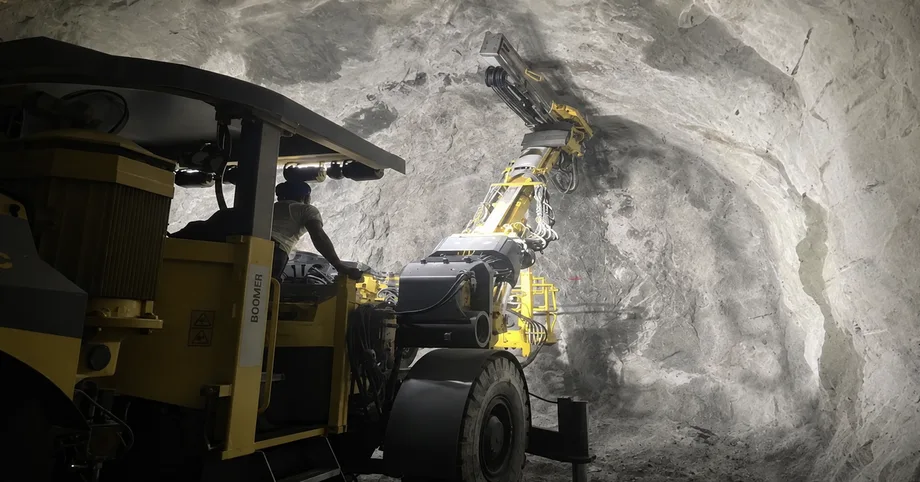
Deep inside the mountains of Khanh Hoa province in central Vietnam, hundreds of engineers and construction workers are working around the clock to build the country's first pumped-storage hydropower facility. The VND21.1 trillion project, valued at $800 million, is designed to function like a giant rechargeable battery that stores surplus renewable energy and helps stabilize the national power grid. At the Bac Ai pumped-storage hydropower construction site in Bac Ai Tay commune, trucks continuously transport excavated rock and soil out of tunnels while drilling machines advance deeper into the mountains. Inside the tunnels, powerful lights illuminate the underground passages, and large ventilation ducts maintain a constant supply of fresh air. The construction site operates 24 hours a day, with workers rotating through three shifts to maintain progress on the massive infrastructure effort.
目录
- Building a Giant Battery Inside the Mountains
- Overcoming Geological Surprises Underground
- How Pumped-Storage Hydropower Works
- Securing International Equipment and Financial Shifts
- Environmental Safeguards and Civic Space Concerns
- Financial Asymmetry and Legacy Coal Debt
- The Timeline to Completion
- At a Glance
Lieutenant Colonel Le Dinh Binh, who oversees one of the tunneling operations for Lung Lo Construction Corporation, said approximately 120 engineers and workers have been mobilized for his company's section of the project. We work in three shifts, 24 hours a day, Binh said. The excavation process involves drilling, controlled blasting, removing rock and transporting excavated materials out of the tunnels. Once a section has been cleared, drilling equipment is moved forward to begin another cycle. On average, workers complete approximately two excavation cycles per day at each working face. One of the biggest challenges is the complicated network of tunnels running through the mountains at different elevations. Some tunnels are located at elevations of 300 meters, while others run at 200 meters, 140 meters or 103 meters. Several contractors must also operate simultaneously in confined underground spaces, sometimes sharing the same transportation routes. This requires careful coordination, particularly during blasting operations, to ensure worker safety. According to Binh, Lung Lo has deployed nine tunneling machines, including three newly purchased units worth nearly VND50 billion. The additional equipment has significantly improved construction productivity. At peak performance, the company excavated 200 meters of tunnel in a single month, its fastest tunneling rate to date.
Pham Quoc Huy, deputy director of the project management team at Song Da 10 Joint Stock Company, said Bac Ai has presented more demanding productivity requirements than many hydropower projects his company has previously undertaken. With more than two decades of experience in underground hydropower construction, Huy said traditional excavation rates at some earlier projects averaged only 80 to 100 meters per month. At Bac Ai, average tunneling productivity has reached 130 to 140 meters per month, he said. He attributed the improvement to accumulated construction experience and the deployment of modern machinery. Across the construction site, approximately 450 workers and engineers from various contractors are operating in continuous shifts. The project's underground tunnel network extends approximately 17 kilometers, with some sections reaching depths of 500 meters.
Overcoming Geological Surprises Underground
According to Nguyen Duc Cuong, head of the technical department at Electricity of Vietnam's Power Project Management Board 3, contractors have completed approximately 7.6 kilometers of tunnels, equivalent to 44% of the planned excavation work. Despite extensive geological surveys and engineering preparations, the construction teams have encountered unexpected underground conditions. Cuong described one particularly difficult section where preliminary surveys had identified a weak geological zone approximately 40 meters long. However, excavation revealed that the fractured and unstable rock formation extended for 170 meters. This created significant technical difficulties. For tunneling contractors, solid and stable rock generally provides more favorable excavation conditions than weak or fractured geological formations. In unstable ground, workers cannot simply continue drilling and blasting without additional reinforcement. Each stage requires careful excavation, installation of support structures and stabilization of the tunnel before work can proceed. The project developer, design consultants, supervision teams and geological specialists worked together to develop a solution, with assistance from foreign experts involved in the project. They eventually agreed on a method combining excavation with progressive reinforcement. As contractors advanced through the fault zone, they installed supporting frames and reinforced the tunnel roof to maintain stability. According to Cuong, the process took three to four months. The construction teams have now passed the difficult section, and geological conditions have become more stable, allowing excavation to accelerate.
How Pumped-Storage Hydropower Works
The Bac Ai pumped-storage hydropower plant will have four generating units with a combined installed capacity of 1,200 MW. Its operating principle differs fundamentally from that of a conventional hydropower plant. Instead of generating electricity only when water flows downhill, Bac Ai will use two reservoirs at different elevations to store and release energy according to the needs of the national power system. Nguyen Huu Duc, deputy director of EVN's Power Project Management Board 3, explained that the facility will pump water from a lower reservoir to an upper reservoir when electricity is abundant. For example, during midday, when solar power generation is high, the plant can use surplus electricity to pump water uphill across an elevation difference exceeding 400 meters. After approximately nine hours of pumping, the upper reservoir can be filled. In the evening, when solar generation declines and electricity demand increases, water will be released from the upper reservoir through turbines to generate power. The water will then return to the lower reservoir, ready to be pumped uphill again during the next charging cycle. The process resembles charging and discharging a giant battery. When the electricity system has surplus power, the plant consumes electricity to store energy by lifting water. When demand rises, the stored water is released to generate electricity and supply the grid. Unlike a conventional battery, however, the energy is stored as the gravitational potential energy of water rather than through electrochemical reactions.
Securing International Equipment and Financial Shifts
The consortium, led by Voith Hydro Shanghai, signed a contract with Vietnam Electricity, according to an announcement on November 9. As consortium leader, Voith Hydro Shanghai will lead the core electromechanical equipment package for the Bac Ai project. The scope covers pump-turbines, motor-generators, and governor, excitation, and control systems. During the signing, Nguyen Anh Tuan, EVN chairman and representatives of the consortium discussed the Bac Ai project and future cooperation. The parties agreed to maintain close communication and collaboration as the project moves forward. EVN also outlined its future investment plans for power generation and grid infrastructure and expressed interest in exploring further opportunities with its partners. Steve Lewis, president and CEO of Voith Hydro China and APA, said, "The Bac Ai project is a landmark in Vietnam's energy transition. This award underscores Voith's technological strength and global project experience in large-scale pumped storage. Together with EVN and our partners, we will bring Voith's technology and project capabilities to the Bac Ai project and support the development of a more flexible and reliable power system in Vietnam."
While equipment deals move forward, broader geopolitical shifts are reshaping the financial landscape of Vietnam's green energy sector. When the United States withdrew from Vietnam's Just Energy Transition Partnership on March 5, 2025, it took with it over $3 billion in pledged American support. This included a $1 billion World Bank loan guarantee and a $1 billion commitment via the U.S. International Development Finance Corporation, while several major American banks also left the Net Zero Banking Alliance. Because the climate pact was already suffering from bureaucratic delays and sluggish disbursements, Washington's departure initially caused widespread alarm. However, Vietnam has other means to secure funding, such as through engagement with Chinese financial and industrial partners led by Beijing's Green Belt and Road Initiative.
Environmental Safeguards and Civic Space Concerns
Given the ongoing delays from its Western partners, Vietnam has increasingly sought support from China. However, a published evaluation from International Rivers warns that leaning on Beijing's financing model threatens to strip the just transition element by jeopardizing environmental, social, and governance standards. Nowhere is the appeal of Chinese financing more evident than in Vietnam's suffocating civic space, which monitors classify as closed. While Western and multilateral donors may have their share of shortcomings, they at least maintain formal governance guardrails on paper. For instance, Brussels promotes its Global Gateway as a values-based alternative that pairs infrastructure with human rights, and its January 2026 Comprehensive Strategic Partnership with Hanoi explicitly incorporates labor protections alongside the bilateral free trade agreement.
Western agencies have certainly dodged accountability regarding Vietnam's human rights violations. Yet in 2025, United Nations special procedures found that no Just Energy Transition Partnership pledges were formally conditioned on human rights. Meanwhile, Germany's GIZ hid behind its label as a service provider, and the Asian Development Bank pleaded ignorance beyond media reports. Yet, sustained international advocacy and European trade scrutiny still had an impact. This influence is best illustrated by Hanoi's treatment of six climate advocates, who were arrested between 2021 and 2023 on alleged tax evasion and unlawful document possession charges right as the climate partnership was taking shape. Paradoxically, these were the same coalition members whose advocacy helped secure Vietnam's 2050 net-zero pledge in the first place. Following relentless global pressure, all six have now been freed, culminating with the release of environmental lawyer Dang Dinh Bach in June 2026, though only after he served his full five-year sentence.
However, Hanoi's apparent goodwill ended upon their release. The advocates' organizations remain shuttered, government decrees have tightened censorship and state control over civil groups, and the transition secretariat was relocated to the Ministry of Industry and Trade amid Tô Lâm's 2026 consolidation of power. If Vietnam aligns with China, it will never have to fake sympathy with grandiose, surface-level gestures for outside observers. China's Green Belt and Road Initiative is largely a rebrand of the Belt and Road Initiative with the exact same underlying institutional habits, imposing zero expectations for open civic space, transparency, or keeping activists out of jail.
Financial Asymmetry and Legacy Coal Debt
According to the International Rivers evaluation, China committed approximately $28.2 billion between 2000 and 2022 in development finance to Vietnam, pouring roughly three-quarters of this capital into the energy sector. This included $3.6 billion in emergency coal loans for plants such as Vinh Tan 1, Vinh Tan 2, and Quang Ninh 2 after Western and Japanese lenders withdrew their support. Against this massive financial weight, the climate partnership's $15.5 billion package appears positively modest. International Rivers states that it barely covers 11% of the $136.3 billion required for power plans through 2030, with an additional $699.1 billion needed through 2050, and grants making up a mere 2% of the overall total. Furthermore, individual donor pledges form a fragmented ledger of debt and export credits. The European Union and its member states committed EUR 2.8 billion with only 5% in grants, the Asian Development Bank pledged $2.1 billion, and Britain offered up to $6.5 billion in export credit ceilings. South Korea provided targeted industrial financing, and Japan supplied bilateral loans alongside over $20 billion under its Asia Zero Emission Community.
Western financiers are not blameless, as their fixation on bankability for private investors often leaves social programs underfunded. At flagship projects such as the Bac Ai pumped-storage hydropower plant, preparatory construction began before environmental and social approvals were finalized. Still, European and multilateral lenders tie loan disbursements to formal benchmarks under the World Bank's Environmental and Social Framework. In contrast, AidData research cited in the report indicates that a major share of China's Vietnamese portfolio carried severe ESG risks. These hazards include ecological harm, worker safety lapses, and forced community displacement, which are further compounded by Chinese and Laotian dams starving the Mekong Delta of sediment. Historically, Chinese banks only accepted stricter ESG clauses when co-financing alongside Western and multilateral lenders, as demonstrated by the 2022 Lotus Wind Power deal.
The Timeline to Completion
Construction is continuing at seven excavation fronts as contractors work toward the project's commissioning schedule. The first 300 MW generating unit is expected to begin operating in December 2029. The remaining three units are scheduled to enter service during 2030, bringing the plant's total installed capacity to 1,200 MW. The entire project is expected to be completed in May 2031. Once operational, Bac Ai will become a major component of Vietnam's energy storage infrastructure, helping the national power system accommodate greater volumes of renewable electricity while improving reliability and flexibility. For the hundreds of workers currently drilling and blasting their way through the mountains, each completed section of tunnel brings Vietnam closer to operating its first large-scale pumped-storage hydropower facility.
Supporters of Beijing's pivot often emphasize that China pledged to end overseas coal finance in 2021. Since then, the country has shifted toward wind projects, such as PowerChina's 30-megawatt Huong Linh 4 plant, alongside solar manufacturing and electric vehicle supply chains. However, construction and equipment contracts drive much of China's clean energy push, rather than transparent loan disclosures. Furthermore, legacy Chinese coal debt, which is built on 16-year loans averaging 3.1 to 4% interest, leaves the state utility financially exposed if plants are retired early without creditor refinancing. More concerning is that Beijing's no-strings financing provides Hanoi with a convenient escape hatch whenever Western partners attempt to enforce social or environmental regulations. Even Vietnam's March 2026 Decision 458, which grandly vows to leave no one behind, remains hollow. Between 50,000 and 70,000 coal workers still lack dedicated transition funding, even as Vietnam's surging power demand drove coal imports to a record 65.43 million metric tons in 2025.
At a Glance
- The Bac Ai pumped-storage hydropower project represents an $800 million investment in Vietnam's first energy storage facility of this scale, featuring a 1,200 MW total capacity across four 300 MW units.
- Contractors have completed approximately 7.6 kilometers of tunnels, overcoming challenging geological fault zones with progressive reinforcement methods.
- Voith Hydro Shanghai leads the core electromechanical equipment consortium, supplying pump-turbines, motor-generators, and control systems under a contract signed on November 9.
- The United States withdrew over $3 billion in Just Energy Transition Partnership support in March 2025, prompting Vietnam to pivot toward Chinese financing through the Green Belt and Road Initiative.
- International Rivers warned in an October 2026 report that China's financing model lacks environmental and social safeguards, while legacy coal debt and unaddressed protections for thousands of coal workers remain pressing concerns.
- The first generating unit is scheduled to begin operating in December 2029, with full project completion targeted for May 2031.