
Building Homes on the Red Planet
Planning human settlements on Mars requires solving a major engineering puzzle regarding how to construct safe shelters using local resources. Transporting every brick and bag of cement from Earth is simply too heavy and expensive for space agencies to manage. Researchers based in Hong Kong have now proposed a surprising solution that borrows a technique from the kitchen pantry. Scientists at the Hong Kong University of Science and Technology and the Hong Kong理工大學 have developed a low energy building material that uses yeast and gelatin to bind Martian soil.
目录
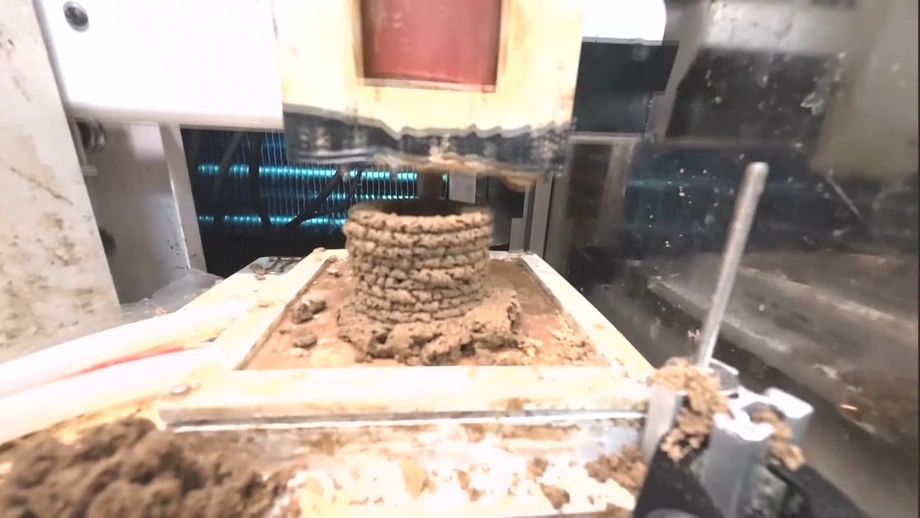
Earthbound construction typically relies on massive amounts of water and high temperature kilns to bake cement, methods that are impossible on a cold, dry planet like Mars. The new method uses 3D printing equipment to squeeze out a frothy brown mixture that hardens into a strong, porous foam. This process takes advantage of the harsh Martian climate itself rather than fighting against it. The local atmosphere acts as a natural freezer and vacuum chamber to dry the material instantly.
The Inspiration Behind the Freeze Dried Material
Everyday snacks provided the spark of imagination that started the entire research project. Jishen Qiu, an associate professor in the Department of Civil and Environmental Engineering at the Hong Kong University of Science and Technology, realized that food items undergo strange structural changes when water is removed. People notice that fruits become remarkably rigid and hard after going through a standard dehydration process. The scientific team wondered if that exact phase change could be replicated using extraterrestrial dirt and biological glue.
Professor Qiu described the thought process behind the breakthrough during interviews with science journalists. My inspiration came from freeze dried fruit, which actually gets harder after losing its water content, Qiu said to Cell Press when explaining how the team started their experiments. The researchers found that the low pressure and freezing temperatures of Mars match the conditions used in food processing laboratories. Water trapped inside the printed mixture turns directly from ice into vapor, leaving behind a light and sturdy lattice structure without needing any external heat sources.
Mixing Mars Sand with Genetically Engineered Yeast
Creating the building blocks requires a specific recipe that combines artificial ingredients with simulated planetary dirt. Technicians start with a laboratory created version of Martian soil, known as regolith, which mimics the sandy dust found across the Red Planet. They mix this dust with a gelatin based hydrogel that acts as a safe home for living organisms. Inside this gel, the team uses genetically engineered yeast cells that have been modified to produce sticky proteins. These proteins work like natural glue to hold the loose mineral grains tightly together.
Adding the yeast creates a massive boost in structural integrity compared to using simple binding agents alone. Tests show that the compressive strength of the yeast enhanced material increases by 170 percent when compared to using gelatin by itself. The final product achieves a compressive strength of about twelve megapascals and a bending strength of about six megapascals. Professor Qiu noted that this level of durability equals the performance of low grade concrete used in standard construction projects on Earth. The material easily handles the pressure required to build stable structures even though planetary gravity differs significantly between the two worlds.
Overcoming Extreme Cold and Near Vacuum Pressures
Martian weather presents brutal conditions that would shatter ordinary building supplies instantly. Temperatures often drop below negative eighty degrees Celsius, and the thin atmosphere creates a near vacuum that causes unprotected liquids to boil away or freeze. The 3D printing ink developed by the Hong Kong team is designed to react to these exact extremes. When the nozzle squeezes the wet mixture into a simulated environment kept at negative thirty degrees Celsius and zero point zero one atmospheres, the trapped moisture freezes and instantly sublimates into steam. This reaction leaves behind a lightweight foam that stands up to fierce winds and flying dust storms.
Energy efficiency represents the main advantage of this biological approach over traditional engineering ideas. Past proposals often required massive rovers with high powered lasers or solar furnaces to melt rocks into solid bricks. Those thermal methods consume staggering amounts of electricity, which is difficult to generate during the early stages of establishing an alien base. The yeast method requires one to two orders of magnitude less energy than traditional heating and sintering techniques. Saving electricity means that early settlers can dedicate more power supplies to life support and scientific instruments.
Small Test Models and Future Challenges
Laboratory testing currently relies on small scale models to prove that the chemistry works as intended. Researchers have built tiny dome shaped structures using a honeycomb pattern, but these test pieces measure only forty five millimeters in height, roughly the size of a standard wine cork. Scaling up the production process into full sized habitats remains a major hurdle for the engineering team. Future missions will need to bring heavy equipment and automated printers to the surface before any large scale construction can begin.
Living spaces for astronauts must solve many other problems beyond simply stacking walls. Professor Qiu acknowledged that practical habitats must integrate systems for maintaining internal air pressure, blocking cosmic radiation, regulating heat, and keeping out fine abrasive dust. The research paper notes that these combined requirements will likely necessitate a hybrid architecture. Settlers might use the yeast foam for exterior nonstructural shields or insulation while relying on heavier modular units for pressurized living quarters. Another intriguing possibility involves recycling the building blocks. If even a single yeast cell survives the harsh environment, the old foam can theoretically be broken down and regrown inside a bioreactor for future expansion projects.
Comparing Space Construction Techniques
Space agencies around the world are racing to find practical ways to build extraterrestrial bases without hauling every kilogram of material from Earth. NASA maintains competing research projects such as the Mycotecture Off Planet program at the Ames Research Center. That American initiative explores growing fungal mycelium networks around planetary soil to create fire resistant and radiation shielding bricks. While the American project focuses on fungal threads, the Hong Kong team utilizes engineered yeast and gelatin to achieve similar structural goals through rapid freeze drying. Both approaches highlight a growing shift toward biological engineering in aerospace design.
Transporting raw materials will remain a bottleneck until local manufacturing becomes fully operational. Early missions will still need to deliver hundreds of tons of supplies from Earth before settlements can achieve self sufficiency. Rocket payload limits dictate how fast new technologies can be deployed on the ground. Researchers remain optimistic that biology will play a major role once the basic infrastructure takes root. Professor Qiu stated that no fundamental laws of physics prevent humans from constructing permanent homes using local sand and biological binders.
The Bottom Line
- Hong Kong researchers developed a 3D printable building material using simulated Martian soil, gelatin, and genetically engineered yeast.
- The manufacturing process was inspired by the way freeze dried foods become rigid when moisture is removed through sublimation.
- The resulting foam material achieves a compressive strength comparable to low grade concrete while consuming far less energy than traditional thermal baking methods.
- Current test structures are limited to small scale forty five millimeter prototypes, and scaling up will require solving major challenges involving energy supply and habitat pressurization.