

Unsuspecting Young Girl Faces Rare Diagnosis
Many people believe that cancer only affects older adults, leaving young people and children out of the conversation. This common misconception can lead families to delay vital medical evaluations when unusual symptoms appear. An 11-year-old girl from Hunan Province named Yuanyuan discovered a small lump on the left side of her neck in May 2024. Local medical examinations categorized her thyroid nodule as TI-RADS 4A, a classification system used by doctors to assess the risk of malignancy through ultrasound imaging. Physicians at the time advised a needle biopsy to determine whether the tissue was cancerous and recommended prompt surgical removal if malignancy was confirmed.
目录
Yuanyuan experienced no physical discomfort and showed no other symptoms, which contributed to her family's decision to forgo immediate surgery. Her mother worried that removing the thyroid gland at such a young age would disrupt her normal growth and development. Relying on online information suggesting that most 4A nodules are benign, the family opted for conservative management involving traditional herbal medicine and routine checkups every few months. Over the next two years, however, the nodule continued to grow larger, prompting a visit to a specialized medical center.
Seeking Specialized Care at a Major Hospital
Yuanyuan and her mother traveled to Hangzhou to consult specialists at the ministry's report on clinical oncology guidelines, arriving at the First Affiliated Hospital, Zhejiang University School of Medicine. Shen Haibin, an associate chief physician in the thyroid surgery department at the hospital, reviewed her updated ultrasound scans. The examination revealed multiple nodules in both lobes of the thyroid gland, with the largest one on the left side advancing to a TI-RADS 5 category, indicating a high probability of malignancy.
Further diagnostic testing confirmed a diagnosis of papillary thyroid cancer, the most common type of thyroid malignancy. The cancer had already spread to the lymph nodes on the side of the neck. More concerning was the detection of multiple scattered nodules throughout the lungs, which doctors identified as distant metastasis, meaning the cancer cells had traveled from their primary site to another organ through the bloodstream or lymphatic system. The combination of a young patient, rapid tumor progression, and advanced staging presented a complex clinical challenge for the medical team.
Navigating the Surgical Complexities of Pediatric Cancer
Shen Haibin convened a multidisciplinary medical consultation involving specialists from pediatrics, otolaryngology, nuclear medicine, radiology, anesthesiology, and ultrasound medicine. The panel concluded that the pulmonary nodules were directly linked to the thyroid tumor and recommended a comprehensive surgical approach. The planned procedure involved a total thyroidectomy to remove both lobes of the gland, alongside a central and lateral neck dissection to clear affected lymph nodes, followed by radioactive iodine therapy to target remaining cancer cells in the body.
Faced with the extensive treatment plan, Yuanyuan's mother placed her trust in the medical team.
I believe in your professional judgment, and I believe you can save my daughter.
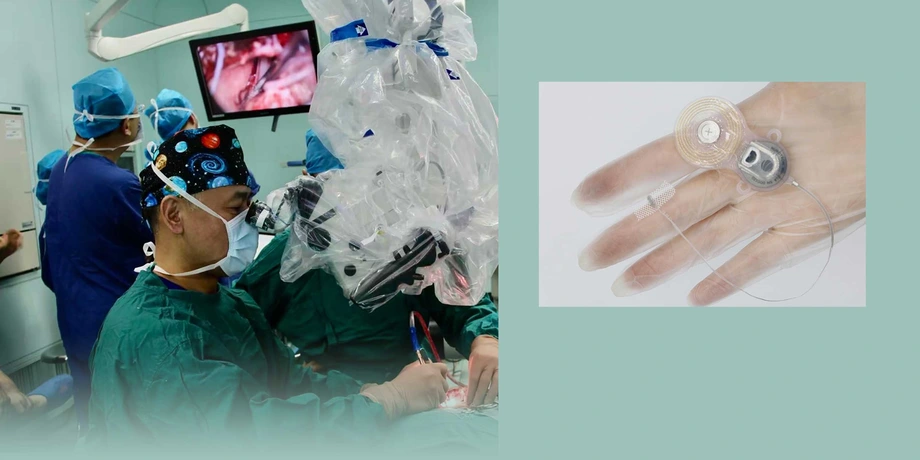
The next day, surgical teams entered the operating room to perform the complex procedure. Upon opening the surgical site, the operating surgeon discovered that the disease had advanced further than initial imaging suggested. The aggressive tumor had invaded not only the thyroid capsule but also the lateral strap muscles and the recurrent laryngeal nerve, which controls the vocal cords. Because children possess smaller anatomical structures that are still maturing, the operation demanded extreme precision to excise the malignant tissue while sparing vital nerves and parathyroid glands.
Understanding the Medical Challenges in Children
Childhood thyroid cancer is a rare condition, accounting for only two to five percent of all thyroid cancer cases globally. Despite the low overall incidence rate in younger populations, pediatric cases often exhibit higher aggressiveness, greater malignancy, and an increased risk of recurrence compared to adult cases. Many young patients arrive at specialized clinics at an advanced stage because early symptoms are subtle and easily mistaken for minor neck ailments.
The biological behavior of tumors in younger patients often involves a higher rate of genetic mutations, which accelerates disease progression. Delaying treatment allows the malignancy to invade neighboring structures such as the trachea and vital nerves, or to spread to distant organs including the lungs, bones, and liver. Medical guidelines indicate that when distant metastases occur, radioactive iodine treatment uses specific dosage thresholds, such as 100 to 200 millicuries for pulmonary lesions, depending on patient age and clinical response, administered at intervals of six to twelve months.
Recognizing Early Warning Signs
Thyroid malignancies rarely present obvious symptoms in their initial stages, making public awareness essential for early detection. Medical organizations emphasize several key physical indicators that warrant immediate clinical evaluation by a specialist rather than passive observation. A painless lump in the front of the neck that gradually increases in size serves as the most frequent primary sign of a thyroid abnormality.
Additional symptoms include persistent hoarseness or changes in voice quality caused by tumor pressure on the nerves governing the vocal cords, difficulty with swallowing or breathing resulting from compression of the esophagus or windpipe, chronic throat or neck pain radiating toward the ears, and unexplained persistent coughing without any signs of a respiratory infection. Experts advise that any child or adult presenting with a hard, growing neck mass should undergo an ultrasound examination promptly to rule out malignancy.
The Essentials
- Yuanyuan discovered a small neck lump in May 2024, which was initially classified as a TI-RADS 4A thyroid nodule.
- The family chose conservative herbal treatment and monitoring due to concerns about surgery affecting normal growth.
- After two years of observation, the nodule advanced to category 5 with lymph node and lung metastasis.
- Physicians at the First Affiliated Hospital, Zhejiang University School of Medicine performed a total thyroidectomy and lymph node dissection.
- Childhood thyroid cancer accounts for two to five percent of cases but features high malignancy and rapid progression.
- Medical guidelines recommend radioactive iodine therapy for iodine-avid distant metastases in patients with advanced disease.