
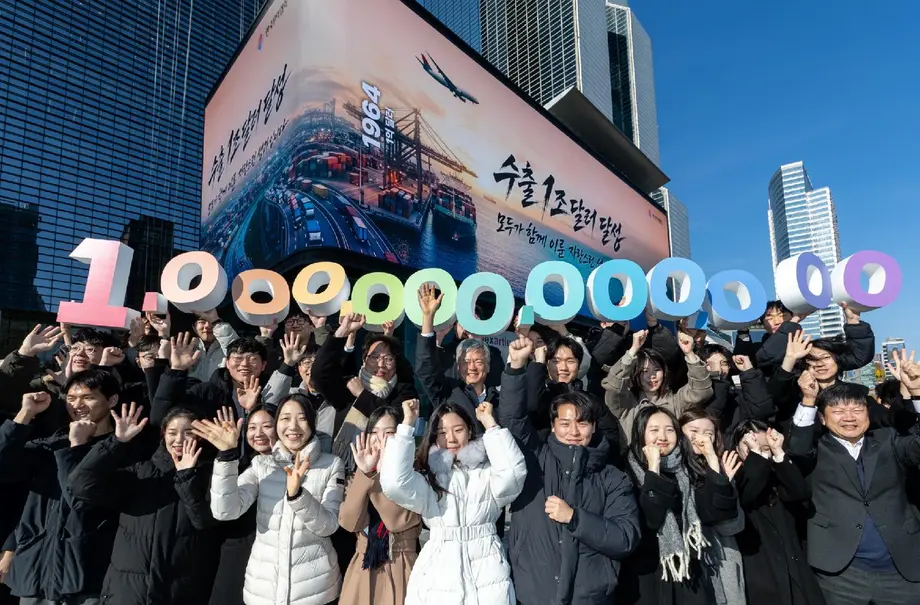
Reaching a Historic Milestone in Global Trade
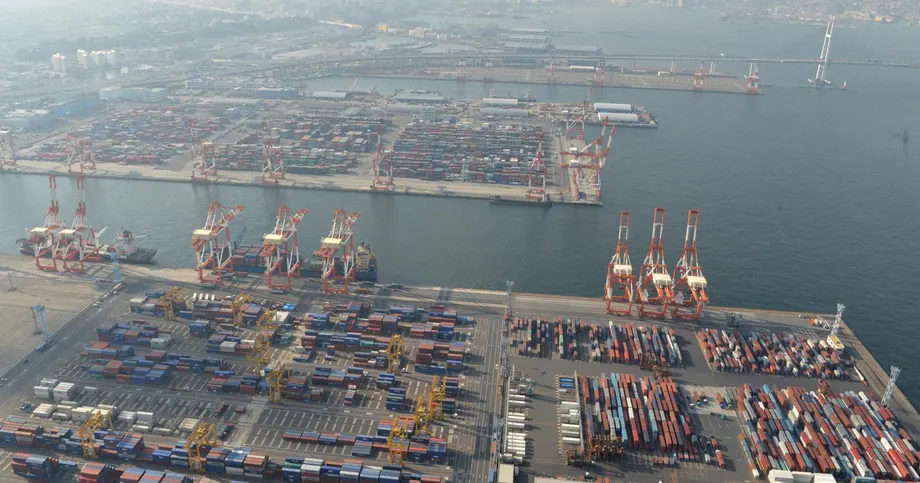
South Korea achieved a historic economic milestone on November 19, 2026, when its cumulative annual exports crossed the $1 trillion threshold for the first time. The Ministry of Trade, Industry and Energy announced that the exact breakthrough occurred at 2:09 p.m. This achievement places South Korea as the fourth country in the world to reach annual exports of $1 trillion, following the United States, Germany, and China, which crossed the mark in 2006 and 2007. The milestone arrived more than a month before the end of the year, driven by an extraordinary surge in global demand for artificial intelligence hardware and advanced computing components.
目录
The growth rate behind this milestone broke records that stood for over five decades. According to trade data released by the Ministry of Trade, Industry and Energy, overseas shipments in October rose by a staggering 93.70% year-on-year to reach US$115.28 billion. This performance marked the strongest monthly increase since January 1974. The cumulative trade surplus for the first ten months of the year reached $294.9 billion, more than triple the previous full-year record of $95.2 billion set in 2017. 관세청 figures show that the country's total exports from January 1 through November 19 reached $1.0015 trillion, representing a 62.9% increase compared to the same period in the previous year.
Surpassing Japan in Major Trading Markets
The export boom has fundamentally altered trade competition in Asia, allowing South Korea to rapidly overtake Japan in several of the world's primary trading economies. An analysis of trade statistics from the World Trade Organization, the Korea International Trade Association, and Japan's Ministry of Finance reveals a dramatic shift in market standing. Among ten major trading markets analyzed outside of Korea and Japan, South Korean exports exceeded Japanese exports in six regions from January to September: China, the United States, the Netherlands, Hong Kong, Italy, and Mexico. During the same period in the previous year, South Korea led Japan in only two of those markets.
This shift transformed the bilateral export competition ratio from 2-to-8 in Japan's favor to 6-to-4 in South Korea's favor. The most striking reversal took place in the United States, the world's largest consumer market. Between January and September of the previous year, Japan's exports to the United States stood at approximately $101.2 billion, outpacing South Korea's $91.4 billion by $9.8 billion. In contrast, South Korea's exports to the United States surged to $151.8 billion during the same months, while Japan reached $104 billion. This created a $47.8 billion advantage for South Korea within a single year. In China, South Korea's exports reached $171.5 billion, which was 1.7 times higher than Japan's $99.5 billion, widening the bilateral export gap from $2.1 billion to approximately $72 billion.
The Role of Artificial Intelligence and Memory Chips
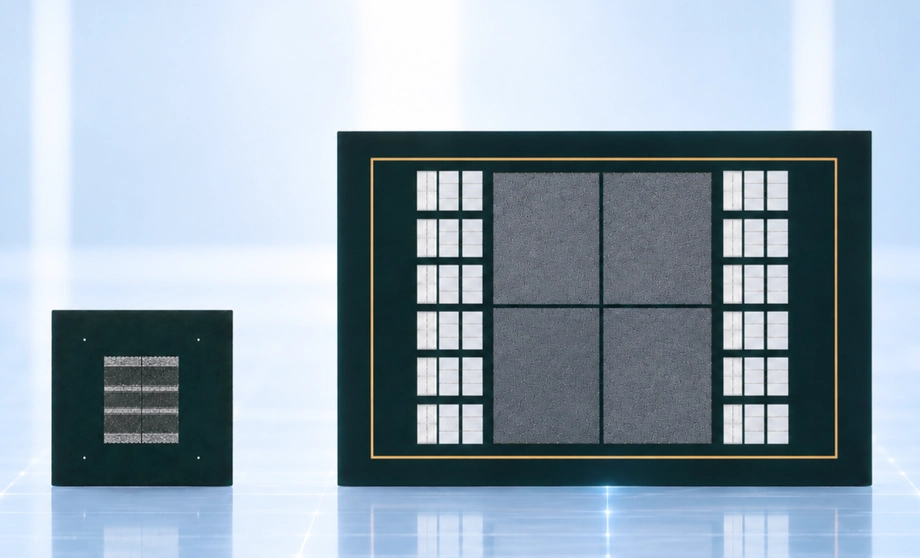
The primary driver behind this expansion is the global race to build infrastructure for artificial intelligence. Global technology companies and cloud providers invested heavily in data centers, generating an insatiable demand for advanced semiconductors. High-bandwidth memory, known as HBM, and dynamic random-access memory, or DRAM, became essential components for powering the graphics processing units that train and run large language models. DRAM provides computers with a temporary workspace for information they need to access quickly, while HBM stacks multiple memory dies to deliver data at extreme speeds to processors.
South Korean manufacturers secured a dominant position in this specialized supply chain. In the second quarter of the year, South Korean companies held an 83.0% market share in global high-bandwidth memory and 65.6% in DRAM during the first half. Semiconductor exports for the January-October period jumped by 193.1% to $3968 billion, accounting for 42.7% of the nation's total exports. This semiconductor supercycle also drove a 496.60% surge in computer exports as the market demanded fully integrated server solutions for machine learning and generative artificial intelligence.
A Shifting Timeline of Expansion
The rapid acceleration of trade over the course of the year unfolded through several distinct phases of technological demand and market adjustment.
- February 2024: South Korean trade data first registers a notable increase in exports to Taiwan, reflecting initial shipments of high-bandwidth memory required for advanced AI processors assembled by TSMC.
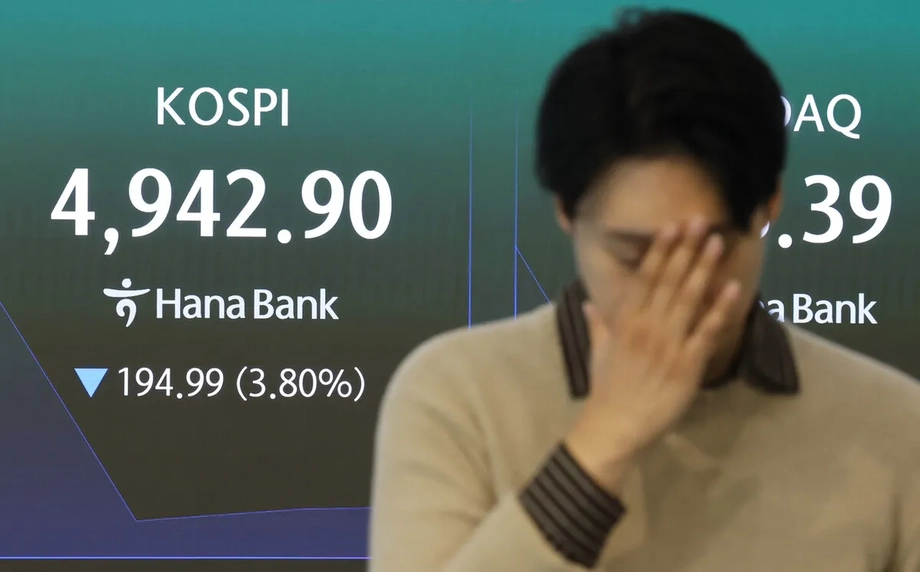
- June 2025: Apple CEO referred to component cost pressures as a 100-year flood while the benchmark Kospi stock index reached a mid-year peak amid surging technology valuations.
- October 2025: Taiwan-bound shipments exceeded 25% of South Korea's total semiconductor exports, while fixed contract prices for standard DRAM began a steep upward climb driven by post-pandemic supply constraints.
- September 2026: Monthly semiconductor exports reached a peak of $60.3 billion, contributing to a record monthly goods surplus of $49.97 billion.
- October 30, 2026: Fixed prices for DDR5 16Gb memory reached a peak of $61.50, marking a dramatic increase from earlier in the year.
- November 19, 2026: Cumulative annual exports officially crossed the $1 trillion mark at 2:09 p.m., establishing South Korea as the fourth member of the $1 trillion export club.
Broader Export Diversification and Regional Growth
Beyond semiconductors, the export surge extended across multiple manufacturing and consumer categories. According to Ministry data, 16 of the country's 20 principal export items recorded growth during the first ten months of the year. Computer exports reached $45.1 billion, electrical equipment totaled $15.6 billion, and non-ferrous metals brought in $16.1 billion. Higher international oil prices pushed petroleum product exports to $57.2 billion, supported by an average crude oil price of $91 per barrel.
Consumer goods and cultural products also achieved record levels. Cosmetics exports reached $12.5 billion, agricultural and fishery products hit $10.8 billion, and biopharmaceuticals totaled $15.2 billion. K-beauty and K-food brands expanded their footprint across emerging markets, contributing to a 67.8% increase in non-automotive consumer goods exports. Small and medium-sized enterprises shared in the growth, with SME exports rising 9.9% to $107.6 billion through October. Regional distribution also broadened, as non-capital regions accounted for 44.9% of the total export increase during the first ten months.
Economic Challenges and Industrial Concentration
Despite record-breaking headline figures, government officials and economic analysts highlighted structural vulnerabilities within the export economy. Semiconductor shipments accounted for over 40% of total exports, creating a high degree of concentration that leaves the national economy exposed to cyclical downturns in the information technology sector. Kim Jung-gwan, the Minister of Trade, Industry and Energy, noted during a meeting with economic organization leaders that the benefits of the export boom had not flowed evenly into domestic consumption. The third-quarter retail sales index declined by 0.5% compared to the previous year, illustrating a disconnect between robust overseas sales and domestic retail activity.
Trade surpluses also generated diplomatic and economic friction. The cumulative trade surplus for the first ten months reached $294.9 billion, while the trade surplus with the United States expanded significantly. This surplus expansion raised concerns regarding potential trade pressures and tariff demands from major partner nations. To address these risks, the government pursued industrial diversification policies, seeking to expand capabilities in system semiconductors, advanced packaging, robotics, biotechnology, and defense manufacturing while encouraging stronger supply chain integration for small businesses.
At a Glance
- South Korea became the fourth country in the world to surpass $1 trillion in annual exports, achieving the milestone on November 19, 2026.
- Semiconductor exports reached $3968 billion through October, representing a 193.1% increase from the previous year and accounting for 42.7% of total shipments.
- South Korean export values surpassed those of Japan in six of the world's ten major trading markets, shifting the bilateral competition ratio from 2-to-8 to 6-to-4.
- Cumulative trade surplus for the first ten months of the year reached $294.9 billion, tripling the previous annual record set in 2017.
- The country maintained a global market share of 83.0% in high-bandwidth memory and 65.6% in dynamic random-access memory during the peak AI infrastructure build-out.